
India's canoeing team concluded its Asian Games campaign without securing any medals, a decline from their bronze-medal performance in the previous Hangzhou edition. The absence of the men's canoe double 1000m event, where India previously medalled, impacted their prospects.

Indian shooting contingent members, including Elavenil Valarivan, Mairaj Ahmad Khan, Anantjit Singh Naruka, and Raiza Dhillon, received a warm welcome upon their return to Delhi after winning medals at the Asian Games. Elavenil expressed confidence despite missing gold, highlighting her win against world and Olympic champions.

Indian Wushu athlete Roshibina Devi secured a silver medal at the Asian Games in the women's 60kg sanda category, overcoming a pre-tournament selection controversy. This marks her third Asian Games medal, adding to her previous bronze and silver.

The Sports Ministry has approved a 492-member contingent of athletes, including 265 men and 227 women, for the upcoming Asian Games in Japan. The squad features prominent athletes like Neeraj Chopra, PV Sindhu, and Lovlina Borgohain across various disciplines, with athletics having the largest representation.

Defence Minister Rajnath Singh felicitated armed forces sportspersons who won 27 medals at the recent Asian Games. He highlighted the role of the Mission Olympic Wing and stressed a focused approach for the 2028 Los Angeles Olympics, aiming to establish India as a leading sporting power.
Indian athletes, including wushu and table tennis players, faced initial check-in difficulties upon arrival for the Asian Games in Nagoya. While some wushu players and coaches reportedly had issues with room allocation on the designated cruise ship, officials stated the problems were resolved. The Games' accommodation plan involves a mix of cruise ships, container rooms, and hotels, with some contingents already raising concerns about the quality and availability of lodging.
Indian shooter Elavenil Valarivan secured two silver medals at the Aichi-Nagoya Asian Games, winning an individual silver in the women's 10m air rifle event and contributing to a team silver. Her performance marks an encouraging start for India's shooting campaign, which aims to build on the success of the previous Hangzhou Asian Games.

Seasoned kabaddi player Pawan Sehrawat has been named India's male flag-bearer for the Asian Games opening ceremony, replacing shot-putter Tajinderpal Singh Toor. Toor was unable to attend due to not receiving his ceremonial kit in time, a logistical issue stemming from the athletics team's acclimatisation camp near Tokyo.
The Delhi High Court has declined to intervene in the Centre's decision not to send an Indian contingent for the men's 94 kg Jiu-Jitsu category at the Asian Games, dismissing a petition by athlete Shubham Kumar. The court stated it cannot compel participation when authorities have made a decision, especially as the Games have already commenced, rendering effective relief impossible.

Indian tennis experienced a significant disappointment at the recent Asian Games, failing to secure any medals for the first time since 1986. The campaign concluded with Sumit Nagal's quarterfinal exit in men's singles, alongside early exits for key doubles pairs. Coaches and officials acknowledge the high level of competition and the need for better support and development of the next generation of players to avoid similar outcomes in future tournaments.

Prime Minister Narendra Modi met India's Asian Games medal-winners, including the gold-winning cricket teams, on Thursday. He praised their achievements, highlighting India's growing strength in sports and its ambition to become a credible host for major international events, including a bid for the 2036 Olympics. Modi also emphasised the government's support for athletes and urged medallists to mentor the next generation.

India's large contingent of 501 athletes is set to compete at the 20th Asian Games in Nagoya, Japan, aiming to showcase the nation's growing sporting depth and its ambition to become a global top-10 sporting power by 2036. Despite initial accommodation challenges, the focus is on building on the momentum from the record 2022 Hangzhou Games, with strong medal hopes in shooting, athletics, cricket, badminton, and hockey.

India's athletics campaign at the Asian Games started strongly with the mixed 4x400m relay team securing a silver medal, their third consecutive Asian Games medal in the event. Additionally, Seema won a surprise bronze in the women's 10,000m race, marking India's first medal in athletics at the Games. Other Indian athletes also progressed to semifinals in various events.
India's six-member League of Legends team, featuring a blend of experienced and new players, is set to compete at the Asian Games 2026 in Aichi-Nagoya, Japan. They are placed in a challenging Group B alongside defending champions South Korea, Chinese Taipei, and Hong Kong, with the tournament running from September 29 to October 2.
The Olympic Council of Asia (OCA) has implemented a stringent Safeguarding Code of Conduct for athletes and officials participating in the Asian Games in Aichi-Nagoya, Japan. The code prohibits inappropriate relationships, degrading language, and harassment, with violations leading to severe penalties including suspension. It also addresses social media use and places special emphasis on protecting minor athletes.
Former India international and coach Soumyadeep Roy is set to join the national table tennis squad for the upcoming Asian Games as a personal coach, five years after being embroiled in a match-fixing controversy at the Tokyo Olympics. Despite the past issues and the suspension of the TTFI, Roy aims to guide his players and contribute to India's medal prospects.
The flag-hoisting ceremony for the Asian Games, involving India and five other contingents, was significantly delayed due to "miscommunication" between the Olympic Council of Asia (OCA) and the local organising committee (ANAGOC). The disruption, which lasted over an hour, initially caused confusion and speculation about political issues, but organisers later clarified it was a communication breakdown, adding to existing organisational challenges for the event.

Seven para-cyclists, recommended by the national federation for the Asian Para Games, were largely omitted by the Sports Ministry, with only one receiving approval. The excluded athletes are planning a protest, alleging discrimination, while the Sports Authority of India (SAI) maintains selections were based strictly on performance criteria.
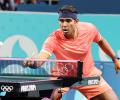
India's deputy chef-de-mission, A Sharath Kamal, has downplayed concerns regarding the unique container room and cruise ship accommodation for athletes at the upcoming Asian Games in Aichi-Nagoya. He stated that Indian athletes have been prepared for these arrangements through mock setups at SAI centres. Kamal also expressed confidence in India's table tennis team, predicting at least one medal, specifically highlighting the men's doubles and mixed doubles pairs.

BCCI Vice-President Rajiv Shukla has confirmed that Indian cricketers participating in the upcoming Asian Games in Japan will stay in designated accommodation provided by the Organising Committee, which, while comfortable, will not be five-star hotels due to scarcity in Nagoya. Both BCCI and IOA have addressed the arrangements, ensuring player comfort and suitable facilities.

Olympic silver medallist Vijay Kumar has urged the 30-member Indian shooting contingent for the Asian Games to prioritise individual medals over team events. He also highlighted the need for significant improvements in coaching, advocating for more former international medallists in the system, and stressed the importance of better grassroots talent identification, drawing comparisons with China. Kumar also commented on the void left by coach Jaspal Rana's death and questioned recent selection policies.

Despite a pre-event declaration by Hockey India president Dilip Tirkey that the teams would revert to blue uniforms, both the Indian men's and women's hockey teams played their opening Asian Games matches in saffron kits, reigniting a controversy over kit colour.
India's foreign trap shooting coach, Peter Wilson, has voiced his disappointment over the exclusion of World Championship bronze medallist Zorawar Singh from the Asian Games squad. Wilson highlighted Zorawar's calibre and the "great shame" of his omission, attributing it largely to the National Rifle Association of India's (NRAI) selection policy which prioritises domestic trials over international results. He also addressed the Indian shotgun team's recent poor World Cup performances and discussed the need for systemic changes to improve access to shotgun shooting in India.
The Sports Ministry conducted a review of India's Asian Games performance, scrutinising the lower-than-expected medal haul in athletics and badminton. Chaired by Sports Minister Mansukh Mandaviya, the meeting addressed issues like injured athletes and future planning for the 2028 Los Angeles Olympics, with a strong emphasis on federations delivering results and nurturing young talent.

A national shotgun coach, involved in India's Asian Games preparations, is under scrutiny by the Sports Authority of India (SAI) for alleged conflict of interest. The complaint, filed by an unsuccessful bidder, concerns the coach reportedly seeking a contract to build a shooting range in Chennai. This probe could impact the coach's participation in the upcoming Asian Games, while the NRAI states it has no knowledge of such activities.

India's athletics campaign at the Asian Games is set to begin, with star shot putter Tajinderpal Singh Toor aiming for a historic third consecutive gold. Long jumper Murali Sreeshankar and long-distance runner Gulveer Singh are also looking to upgrade their previous medals. Despite Neeraj Chopra's absence, the 75-member Indian team targets 25-30 medals across various events, including steeplechase, javelin, and high jump, facing strong competition from other Asian athletes.

Indian hockey teams will return to their traditional blue jerseys for the Asian Games after a controversial shift to saffron kits sparked widespread criticism and internal discord within Hockey India. The decision to revert to blue was confirmed by HI president Dilip Tirkey, who had previously questioned the saffron kit's adoption without proper approval.
Anantjeet Singh Naruka and Parinaaz Dhaliwal overcame a challenging start to secure India's first-ever bronze medal in the Asian Games skeet mixed team event. Their remarkable comeback, fueled by mutual support and a fighting spirit, culminated in a significant achievement for Indian shooting, adding to their individual medal tallies at the Games.

Neeru Dhanda and Kynan Chenai secured a historic mixed team trap shooting gold at the Asian Games, making Dhanda the most successful Indian athlete with three medals. Dhanda, who also won individual gold and team silver, overcame illness and fatigue, while Chenai provided crucial stability, using his father's lucky gun barrel.

Top-ranked 25m pistol shooter Esha Singh discusses her preparation for the upcoming Asian Games, highlighting her unique approach of competing against herself rather than others. She reflects on her recent World Cup gold and world record, emphasizing the importance of mental freshness and focusing on basics.

India's highly anticipated women's 10m air pistol team, featuring Manu Bhaker, Esha Singh, and Suruchi Inder Singh, failed to secure a medal at the Asian Games, with only Bhaker reaching the individual final and finishing fifth. Despite this setback, India managed to win two bronze medals in the men's and women's skeet events, bringing the total shooting tally to seven. The performance has raised questions about India's shooting selection policies and preparation, especially given the contrast with previous Games. Manu Bhaker also spoke about personal challenges, including the recent death of her coach.
The Sports Ministry has approved a 492-member Indian contingent, comprising 265 male and 227 female athletes, for the upcoming Asian Games in Aichi-Nagoya, Japan. Athletics forms the largest group with 73 participants, including star athletes like Neeraj Chopra and Jyothi Yarraji. Other prominent sports like shooting, weightlifting, badminton, boxing, and wrestling also feature strong teams, with some adjustments made due to doping violations.

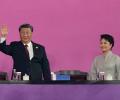
Japan hosted a vibrant opening ceremony for the Asian Games in Nagoya, showcasing its technological advancements and cultural heritage. The event, themed 'Harmonic Heart Beat', welcomed 11,000 athletes from 45 nations, despite prior logistical challenges.

Nitesh Siwach secured India's first Greco-Roman wrestling silver medal at the Asian Games since 1962, though he missed out on gold after being defeated by Japan's Yuri Nakazato in the 97kg final. Meanwhile, Mansi Ahlawat lost her bronze medal play-off in the women's 62kg event, and other Indian wrestlers were eliminated in the quarterfinals.
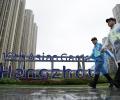
Indian athletes at the Asian Games in Nagoya are facing significant accommodation challenges, including cramped rooms on a cruise ship and long waits for check-in. The host nation's athletes are also affected, with complaints about shared rooms and general mismanagement. Organisers have opted against a traditional Athletes Village, leading to athletes travelling long distances for training, further exacerbating the logistical issues ahead of the mega-event.

India's men's cricket team, despite being full strength, faces a rusty start and weather challenges in their Asian Games semifinal against a second-string Sri Lanka. Heavy rain has hampered their practice, and while the forecast for the semifinal is clear, the final could be affected. India, as top-ranked, will progress if the match is washed out, highlighting the impact of weather on the tournament.
The Indian athletics team for the upcoming Asian Games in Japan has undergone significant changes. Commonwealth Games medallist Yashvir Singh replaces an injured Neeraj Chopra, while long-distance runner Abhishek Pal has been dropped due to an alleged doping offence. Tejas Shirse is also out due to injury. The final team comprises 77 members, with six new additions. The Athletics Federation of India is aiming for 25-30 medals.
India's athletics campaign at the Asian Games started successfully with the mixed 4x400m relay team securing a silver medal, their third consecutive in the event. Additionally, Seema earned a surprise bronze in the women's 10,000m race, marking India's first medal in the event after many years. Other Indian athletes also showed promising performances in various heats.
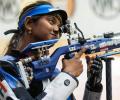
India's shooting campaign at the Aichi-Nagoya Asian Games commenced with a strong performance, securing two silver medals in the women's 10m air rifle event. Elavenil Valarivan was instrumental, winning an individual silver and contributing to the team silver alongside Sonam Uttam Maskar and Vidarsa Vinod. While Valarivan narrowly missed individual gold, her performance, along with the team's, provided an encouraging start for India.
Indian shooter Neeru Dhanda secured back-to-back gold medals at the Asian Games, triumphing in the women's trap and mixed team events despite battling fatigue, illness, and challenging weather conditions. Her remarkable resilience and focus, coupled with a women's team silver, made her a standout performer for India.
